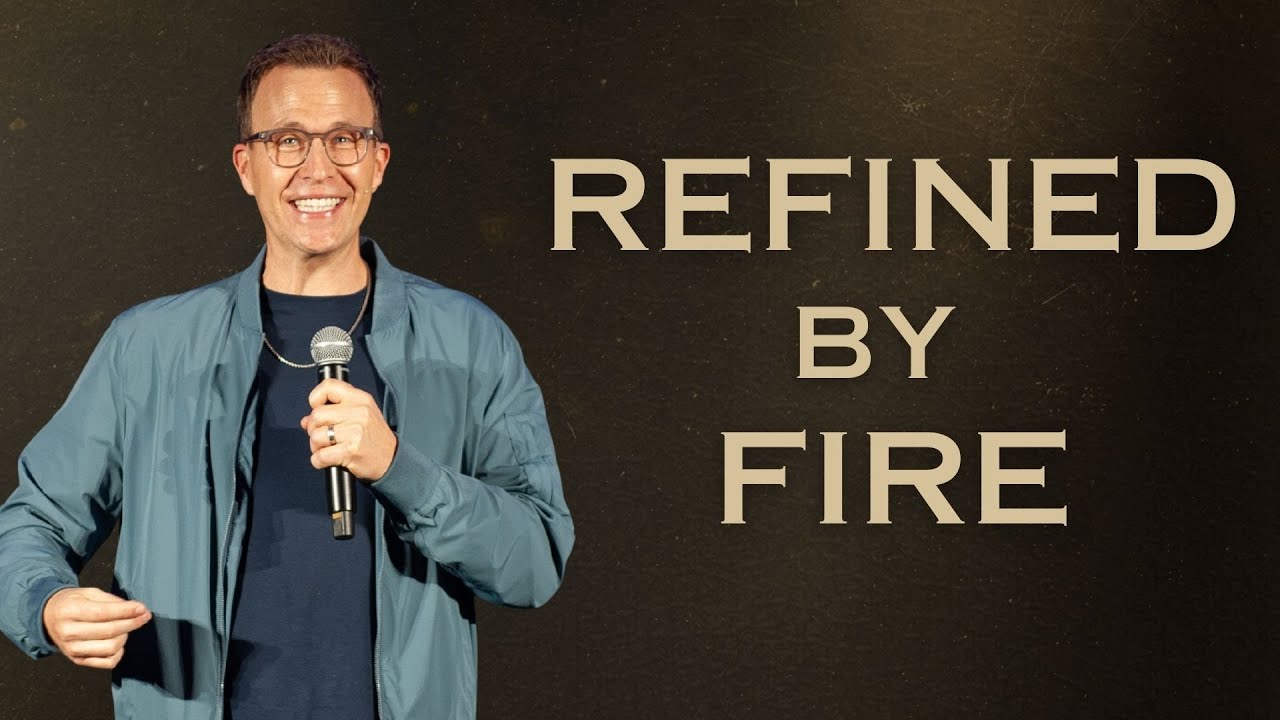
Refined by Fire: Living With Holy Fear
There is a kind of fear that pushes you away from God. And then there’s holy fear, the kind that pulls you closer.
In our Holy Fear series, we said it plainly: the fear of the Lord is not being afraid of God. It’s revering God. It’s living in awe of who He is, honoring Him as holy, and letting that reverence shape how we live. Proverbs 9 puts it like this: “The fear of the Lord is the beginning of wisdom.”
Wisdom has a starting point. And it starts with God being God.
This week, we leaned into the real question: How do we live in the fear of the Lord, not just understand it?
Watch the Message
A Holy Moment That Reorders Everything
Isaiah 6 is one of those passages that grabs you by the shoulders.
Isaiah says, “In the year that King Uzziah died, I saw the Lord…” and he doesn’t describe God as low, weak, or distant. He says he saw “the Lord high and exalted.”
That matters, because a lot of us walk around with the opposite picture.
If we’re honest, sometimes our problems feel higher than God. Our pressure feels louder than His voice. Our circumstances feel more “real” than His promises.
But holiness has a way of doing something in us before it does anything through us.
In Isaiah’s moment with God, the first thing that happens isn’t instructions. It’s vision. Revelation. A fresh, accurate view of who God is.
And that leads to the first movement:
1) Reordering: Seeing God correctly changes everything else
When Isaiah saw the Lord high and lifted up, everything else in his life found its proper place. Priorities shifted. Ambitions realigned. Identity stabilized.
Here’s the line that hit me:
When we see God correctly, we can finally see ourselves accurately.
That is holy fear. Not panic. Not shame. A holy re-centering where God is no longer one option among many. He becomes the center that everything else orbits around.
Holy Fear Doesn’t Flatter You. It Frees You.
Right after Isaiah’s vision, his response isn’t performance. It’s honesty.
He says, “Woe to me… I am a man of unclean lips.”
Notice what he didn’t do: he didn’t justify, blame-shift, or spin it. He confessed.
2) Revealing: God brings what’s real into the light so He can heal it
There’s a sentence in the message that I want you to sit with:
God cannot heal what you will not reveal.
Not because God is petty. Not because He’s waiting to punish you. It’s because healing requires honesty.
And something else is true here too: God rarely heals us outside of community. That’s why confession and prayer with trusted people matters. Not perfect people. Trusted people.
Holiness doesn’t expose you to hurt you. God exposes what’s holding you back. He doesn’t remove you from His presence; He removes what keeps you from enjoying it.
The Fire Isn’t Here to Destroy You
Then it gets intense.
A seraphim takes a live coal from the altar and touches Isaiah’s mouth. Fire touches the very place Isaiah just confessed was unclean.
And this is where many of us quietly back up. Because we like God’s comfort, but we’re nervous about His refining.
3) Refining: God refines what He intends to keep and use
The message made a powerful distinction: in Scripture you see fire of judgment and fire of atonement. This coal from the altar wasn’t condemnation. It was cleansing. A healing fire.
Refining takes time. That’s why Malachi describes God as a refiner who sits. He’s not rushed. He’s steady.
And I loved this picture: the refiner knows the gold is ready when he can see his reflection in it.
God will refine you until you look like Him.
Not because He’s disappointed in you. Because He’s committed to you.
How Do We Live This Out?
If holy fear is the beginning of wisdom, then we need more than inspiration. We need posture. The message gave four responses that shape a life in holy fear.
1) Undivided Allegiance
God isn’t looking for perfection; He’s looking for clarity. An undivided heart.
Holy fire does not share space with rival allegiances. A divided fire goes out.
A simple prayer for this week:
“God, give me an undivided heart.”
2) Willing Surrender
God doesn’t force refining. He invites it. The altar is not a place of loss; it’s a place of exchange.
You bring what’s plaguing you and you offer it to Him, not as punishment, but for healing.
3) Open Hands
This one is so practical. Fire can’t purify clenched hands.
Open hands say: “God, I trust You.” That’s why practices like fasting and tithing matter. Not as religious points, but as formation. They loosen what has a grip on us so God can have more of us.
4) Long Obedience
This might be the most important. We want flashy fire; God wants steady fire.
A faithful life is built through repetition, endurance, and returning to God again and again.
Have a great week, come to church. Have a hard week, come to church. Struggling, get in community. Not struggling, help someone who is.
That’s how lasting faith is formed.
A Prayer to Take With You
Here’s the heart of where we ended, and it’s worth praying again this week:
God, reorder what we live for.
Reveal what needs healing.
Refine what You want to use.
Teach us to live in the fire without resisting it,
and to walk faithfully without burning out.
Form in us a holy resolve, not just a loud faith, a lasting one.
If you feel far from God, this is your invitation back. Not to perform. Not to pretend. Just to return.
And if you’re ready to take a step, we’d love to walk with you. Come sit with us. Join a group. Let someone pray with you. You don’t have to do the refining alone.